AI SEO services help businesses both rank on traditional search engines and appear in answers generated by ChatGPT, Perplexity, Gemini, and Google AI Overviews.
That matters because buyers are no longer relying on Google alone to research products, compare providers, and build vendor shortlists. Instead, they’re increasingly using AI search engines throughout their buyer journey.
So, if your brand is missing from those conversations, it may never even enter their consideration set.
To help you get started with AI SEO, I’ll break down the top eight AI SEO services that work together to improve rankings, citations, brand mentions, and visibility across both traditional and AI search.
AI SEO services are professional services that help a business become more visible, accurately represented, and frequently recommended across traditional search engines and AI-generated answers.
They cover platforms such as Google and Bing, AI search features like Google AI Overviews, and answer engines including ChatGPT, Perplexity, Gemini, and Claude.
Don’t let the name fool you, though. AI SEO does not simply mean using artificial intelligence to produce content. Its purpose is to make your brand and content easier for search crawlers and AI systems to find, understand, cite, and confidently recommend.
That being said, traditional SEO remains an important part of this process, as it primarily focuses on helping individual pages rank in search results and generate organic clicks.
AI SEO builds on that foundation by also optimizing for citations, brand mentions, and recommendations that may appear directly inside an AI-generated answer.
In short, traditional SEO helps buyers find your pages, while AI SEO helps AI platforms include your brand in the answer they provide.
Here’s how AI SEO and traditional SEO differ at a glance:
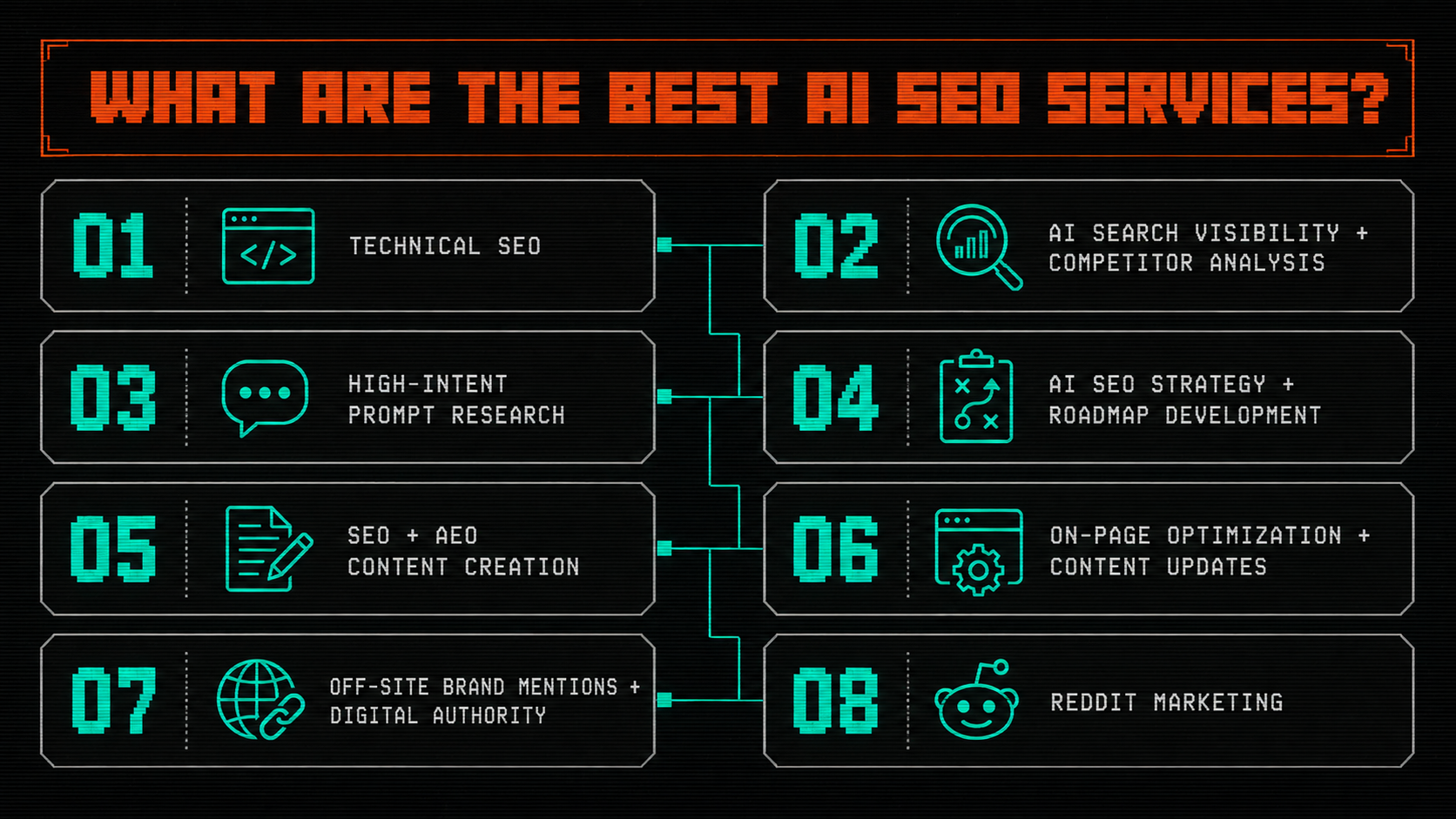
The best AI SEO services include:
Let’s break each down, one by one.
Technical SEO makes sure search engines and AI platforms can access, interpret, and retrieve the information on your website.
It starts with the same foundations used in traditional SEO, while also considering how AI crawlers interact with the site.
Although having structured data and meeting all other technical conditions listed here doesn’t guarantee that an AI platform will cite or recommend your brand, it can reduce ambiguity by clearly identifying details such as your company, products, authors, pricing, ratings, and certifications.
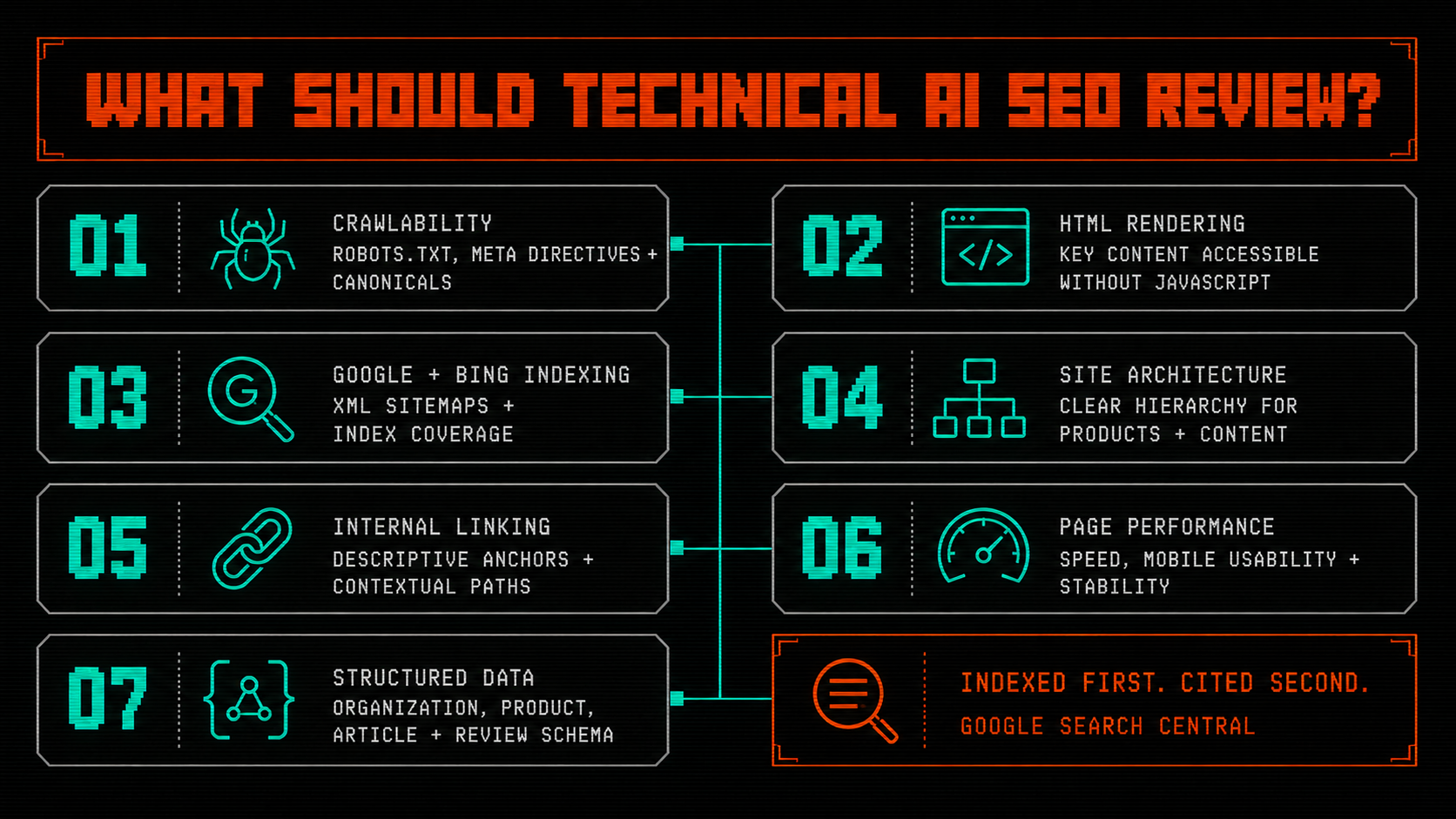
Therefore, you should think of technical SEO as the cornerstone of AI visibility. If crawlers cannot reliably access or understand your content, stronger writing, publisher mentions, and prompt targeting won’t be of much benefit on their own.
A technical AI SEO service should review:
AI search visibility and competitor analysis shows where your brand currently appears in AI-generated answers, how it is described, and why competing brands are being recommended instead.
The analysis begins by testing a representative set of commercially relevant searches across platforms such as ChatGPT, Perplexity, Gemini, and Google AI Overviews.
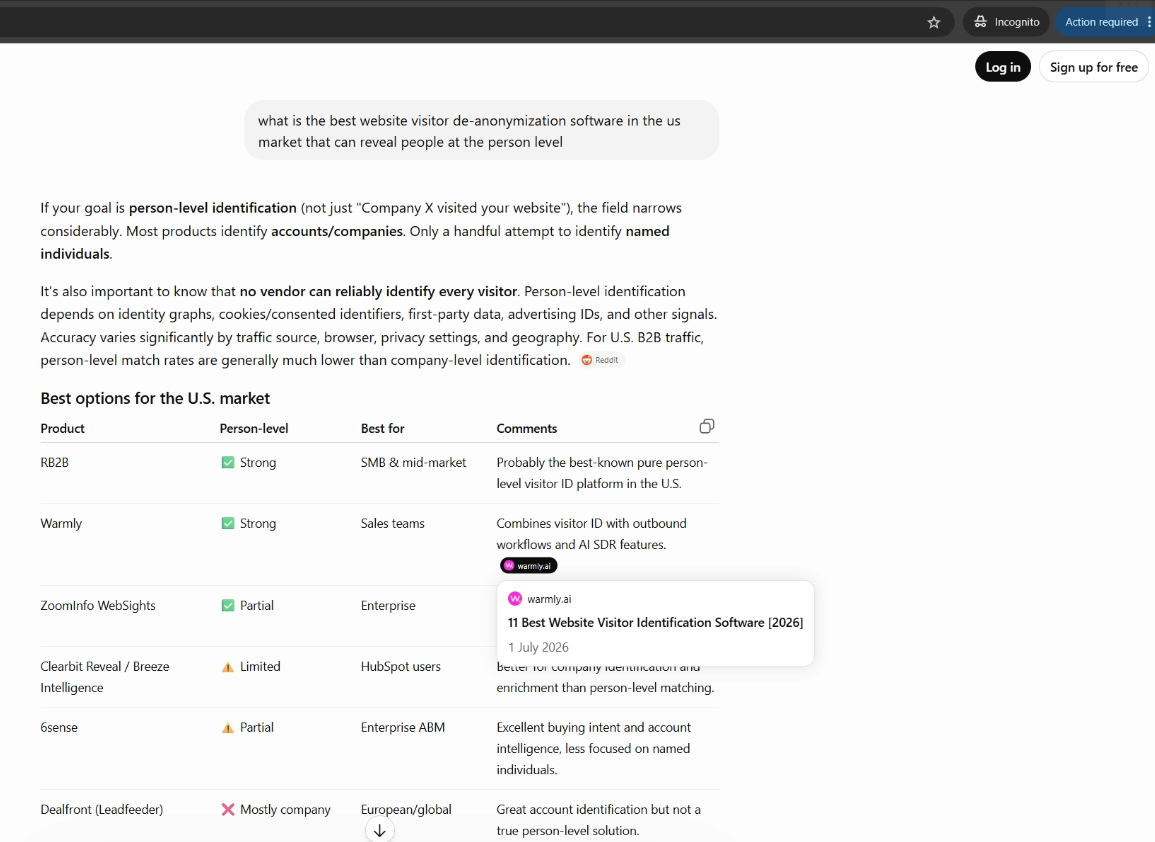
This creates a baseline for evaluating:
The final output should provide:
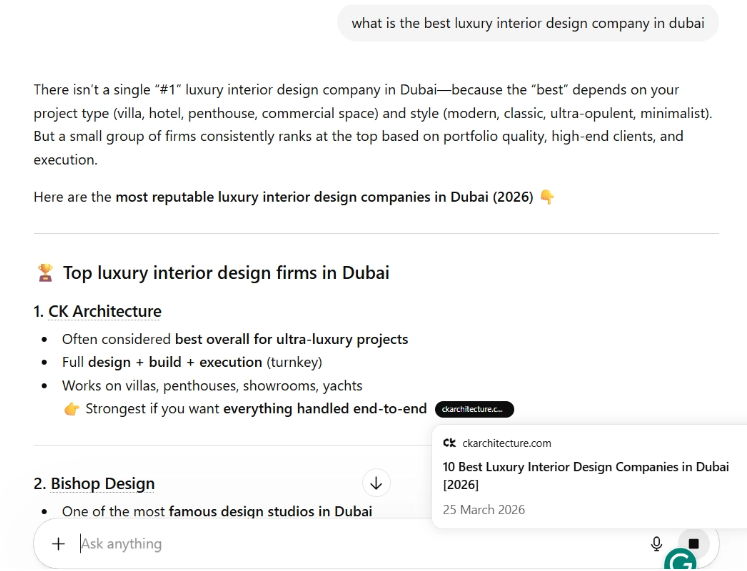
For example, for CK Architecture, our starting analysis showed that the company was not appearing when buyers asked Google and AI platforms to recommend luxury design and build firms in the UAE.
Despite having a strong portfolio, CK was missing from the consideration set for commercially important category searches. Identifying that gap helped us prioritize the searches and sources influencing vendor shortlists.
CK later became recommended for prompts such as the best luxury interior design company in Dubai and the best luxury design and build company in Abu Dhabi.
High-intent prompt research identifies the questions buyers are likely to ask AI platforms when researching a problem, comparing solutions, or deciding which provider to contact.
Unlike Google keywords, AI prompts do not come with dependable third-party search volume data.
Research therefore combines traditional keyword data with customer interviews, sales conversations, competitor research, onboarding responses, and the questions prospects ask before buying.
The strongest prompt lists usually include two groups:
It is also important to determine whether a prompt is grounded.
A grounded prompt causes the AI platform to search the web for current information, making its answer more likely to be influenced through content, rankings, and third-party mentions.
Ungrounded answers rely more heavily on the model’s existing knowledge and may be harder to change in the short term.
Once the priority prompts are selected, ongoing tracking should monitor:
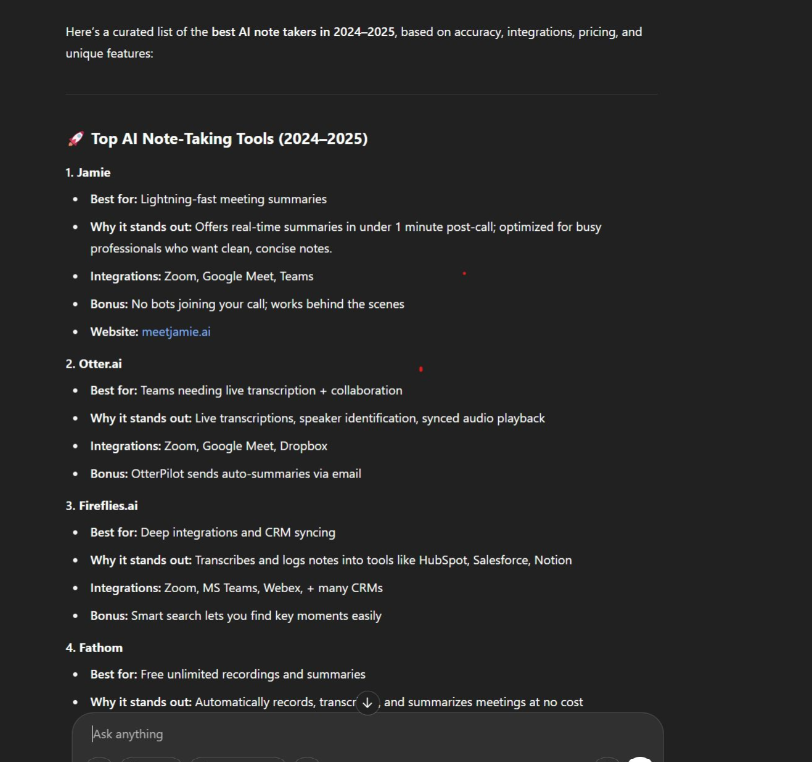
For Jamie, we tracked 74 high-intent topics related to AI note-taking and compared its visibility with established competitors such as Otter and Fireflies.
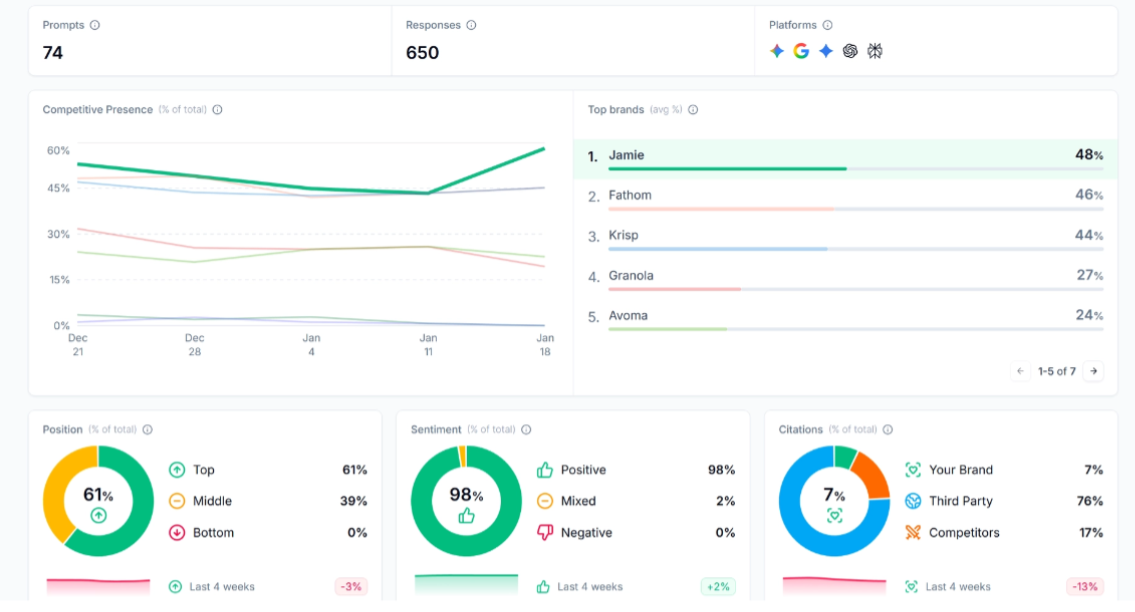
Jamie reached 48% visibility across that prompt set, with the company appearing in the top position for 61% of the prompts where it was visible. Tracking these results showed which topics Jamie was already winning and where further content or authority building was needed.
An AI SEO strategy turns the technical audit, competitor analysis, and prompt research into a prioritized plan of action.
The goal is not to apply every possible AI SEO tactic at once. Each opportunity should be evaluated according to:
The roadmap should then connect every priority prompt or topic with the work required to improve it.
For example, a missing category recommendation may require a new “best software” guide and mentions in third-party listicles. An inaccurate product comparison, on the other hand, may be better addressed by updating an existing page and correcting the external sources feeding the claim.
Technical problems that limit crawling should be resolved first. After that, content creation, on-page improvements, publisher outreach, and Reddit marketing can be planned in coordinated sprints.
And because AI answers and cited sources change, the roadmap should also remain flexible. Prompt performance, competitor activity, and new visibility gaps should regularly inform what the team works on next.
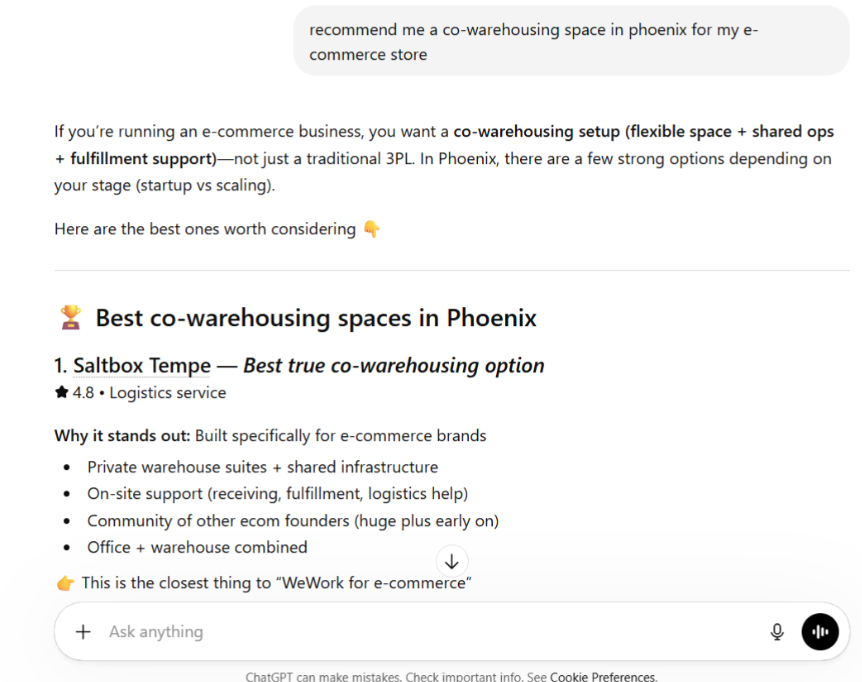
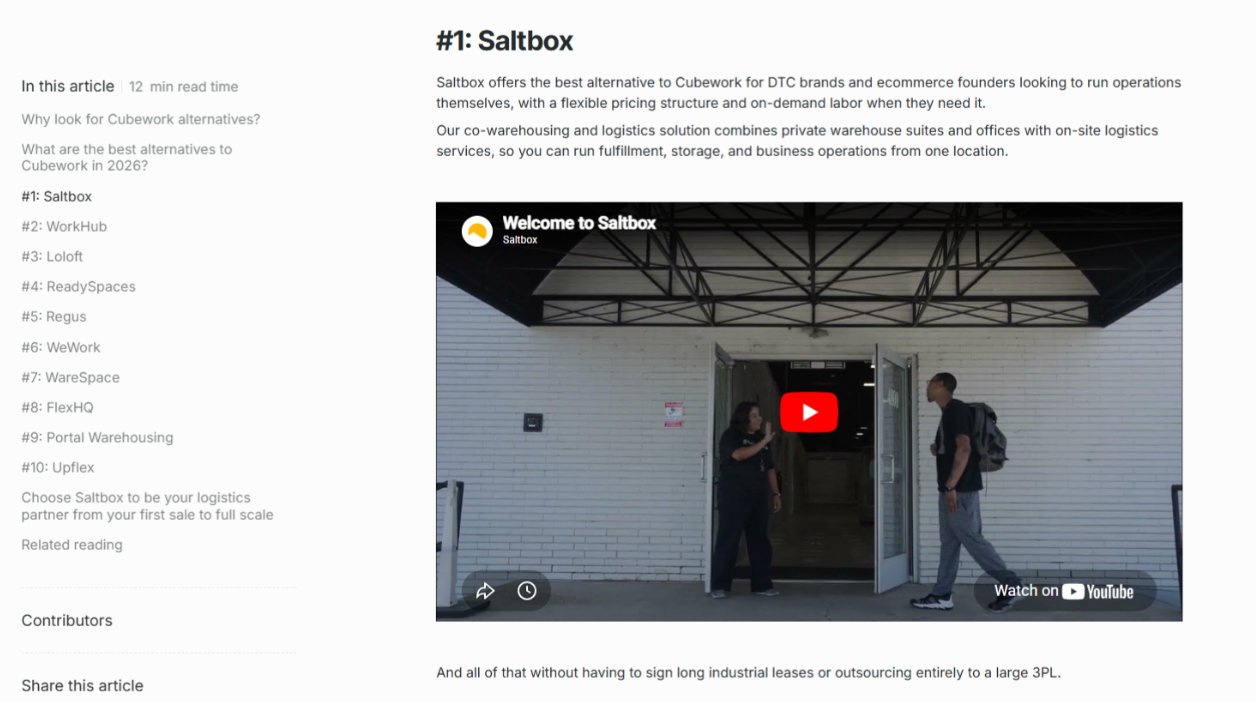
For Saltbox, we first prioritized competitor alternatives to reach buyers actively evaluating other warehousing providers. Once we had covered the core co-warehousing competitors, we expanded into location-based category searches and planned a further move into 3PL alternatives.
This phased roadmap helped Saltbox rank for competitor and location searches while reaching 51% visibility across the 41 AI prompts we tracked.
SEO and AEO content creation includes producing pages that can rank in traditional search results and serve as useful sources for AI-generated answers.
The goal is not to publish generic articles written around keywords or fill the website with unedited AI-generated copy.
Effective content gives buyers genuinely useful information while clearly explaining what the product does, who it is for, how it differs from competing options, and why it is a credible choice.
At House of Growth, we begin by interviewing founders, product teams, salespeople, and customers who understand the product and its market.
This gives human writers the context needed to make accurate comparisons, address real objections, and communicate product strengths without relying on vague marketing claims.
Moreover, each piece should have a clear role within the wider AI SEO roadmap. It should target a meaningful buyer question, contribute original product knowledge, and give both readers and AI systems a defensible reason to consider the brand.
The most valuable content formats usually include:
For SmartSuite, we created competitor alternatives, pricing guides, category listicles, and three-way comparisons across the project management, GRC, and ITSM markets.
The resulting content reached page one for the majority of its targeted competitor searches. SmartSuite also recorded almost four times more non-branded clicks and a 92.5% quarter-over-quarter increase in sessions from LLM platforms.
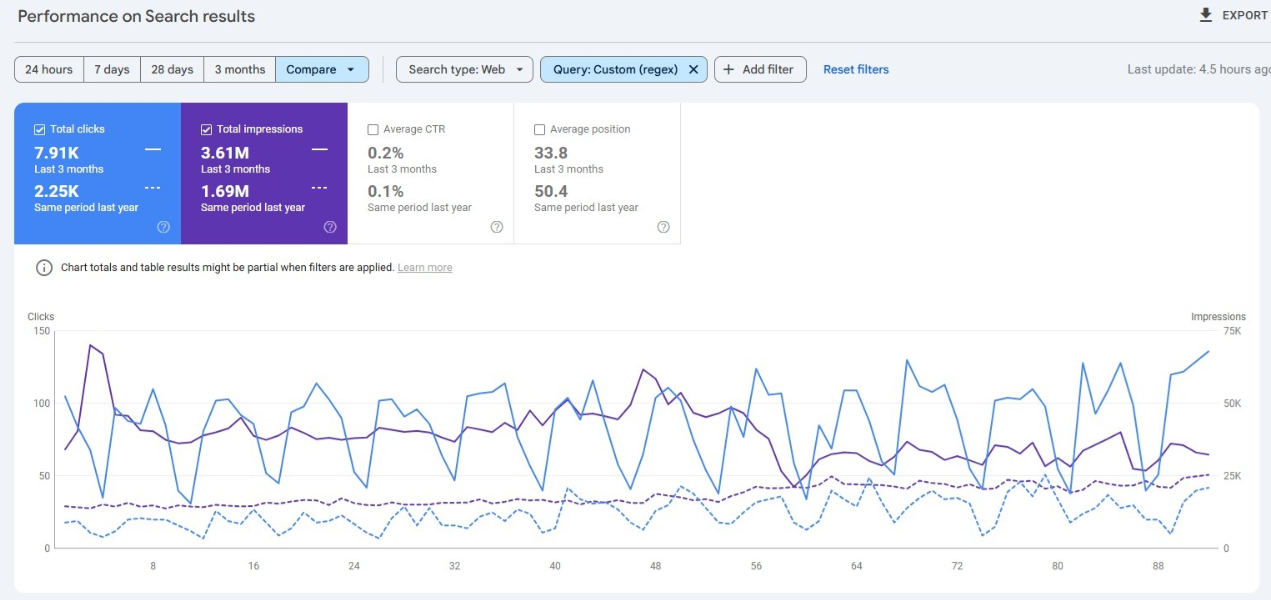
Publishing a page is not the end of AI SEO. On-page optimization makes the content easier for search engines to rank, AI platforms to extract, and buyers to understand.
This involves improving both new and existing pages so their most important information is clear, specific, and easy to locate.
Common on-page improvements include:
Content updates are equally important because pricing, features, competitors, regulations, and market conditions change.
Namely, after analyzing nearly 17 million citations, Ahrefs found that AI assistants cited URLs that were 25.7% fresher than pages appearing in organic search results on average.
An update should verify facts, replace outdated screenshots and statistics, repair broken links, improve weak sections, and add information that has become relevant since publication.
For Warmly, we regularly revisited its highest-priority pages and made meaningful updates as its market and competitors changed.
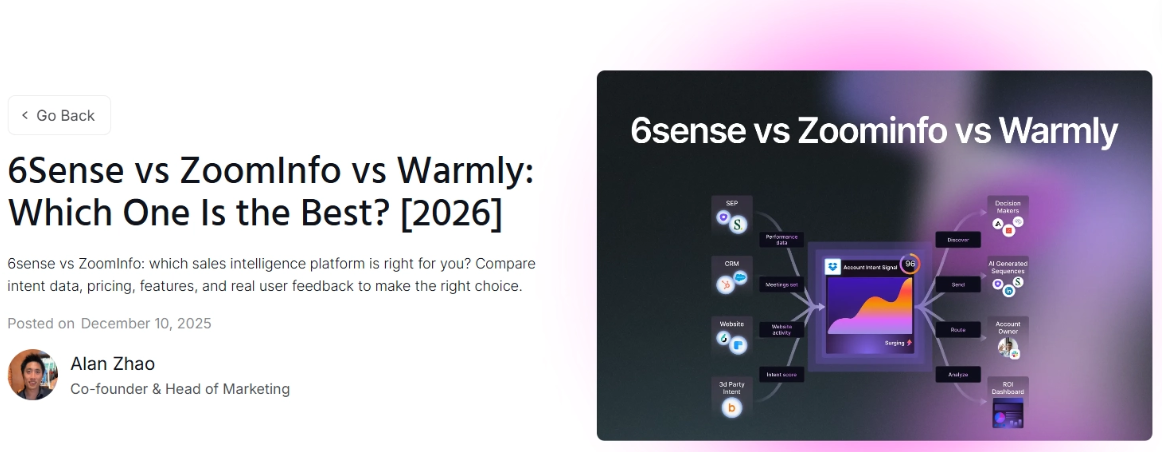
On some articles, we added the current month and year to the title only after updating the underlying content. Simply changing “2025” to “2026” without improving the page does not make it fresh.
Ongoing optimization helps protect existing rankings while giving AI platforms more accurate and current information to cite. It can also uncover opportunities to improve a valuable page before its traffic or AI visibility begins to decline.
Off-site brand mentions help AI platforms verify what a company says about itself through independent sources.
A brand can publish excellent content claiming it is the best solution for a particular category, but AI systems may hesitate to repeat that claim if no other credible source supports it.
Mentions from relevant publishers, industry websites, review platforms, partners, and customers create a broader sense of consensus around what the company does and where it stands out.
In fact, in a study of 75,000 brands, Ahrefs found that branded web mentions had a 0.66 to 0.71 correlation with AI visibility.
These mentions do not always need to include a backlink. Links remain valuable for traditional SEO, but an accurate unlinked mention can still connect the brand with a category, feature, audience, or use case.
Digital authority building can include:
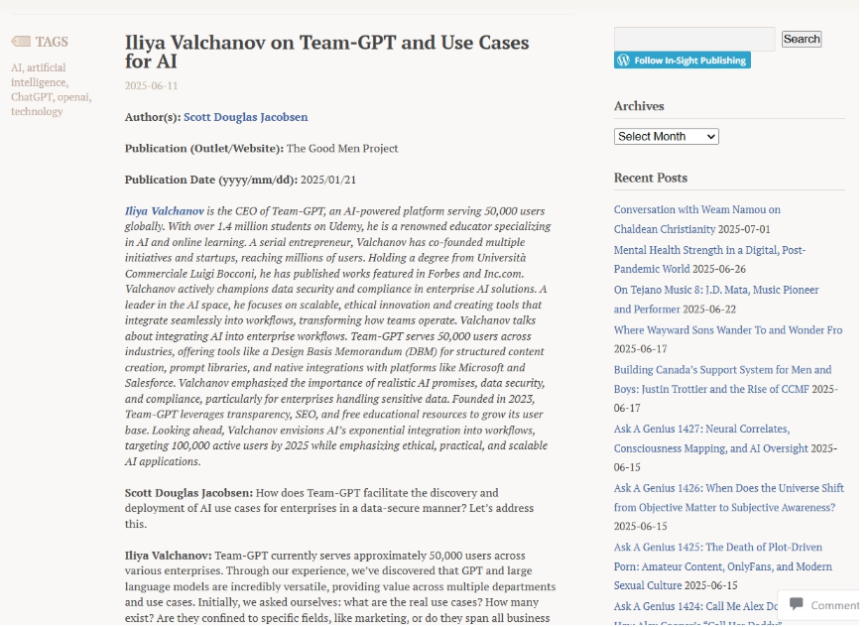
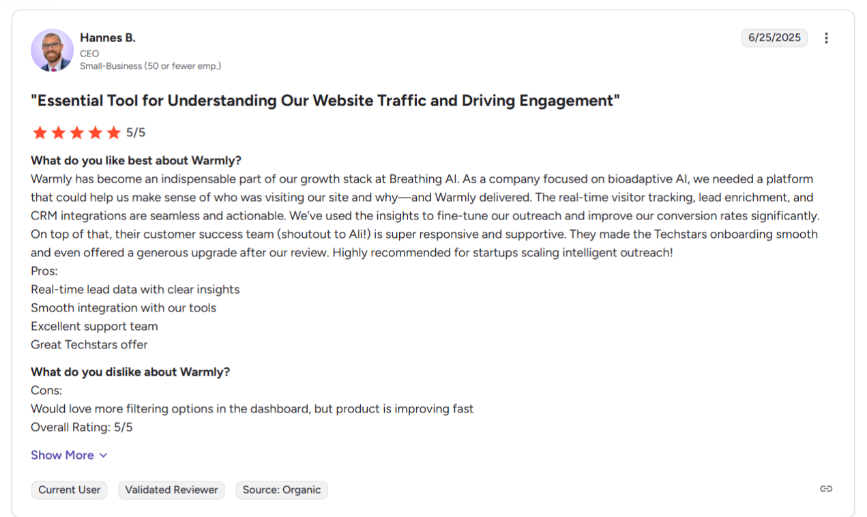
The process should begin by reviewing which third-party sources already appear for priority prompts.
If AI platforms repeatedly cite the same publisher, comparison guide, or review website, earning an accurate mention there may be more valuable than collecting mentions from unrelated domains.
Finally, quality, relevance, and sentiment matter more than the total number of mentions.
A handful of detailed references from sources that genuinely influence your category can provide stronger evidence than dozens of generic placements. Fake reviews, forced endorsements, and irrelevant mentions can also damage trust rather than build it.
Reddit marketing for AI search visibility focuses on the discussions that influence how buyers and AI platforms evaluate products.
AI search engines often reference Reddit when users ask for first-hand opinions, product alternatives, pricing experiences, or honest comparisons.
These discussions can influence which brands are recommended and what strengths or weaknesses are associated with them.
An effective Reddit strategy does not involve leaving promotional comments across random threads. It uses a signal-based approach:
For Warmly, we identified a Reddit discussion where a user was looking for an alternative to RB2B after experiencing payment issues.
Warmly was introduced as a relevant option, with the discussion highlighting its person-level visitor identification and real-time Slack alerts.
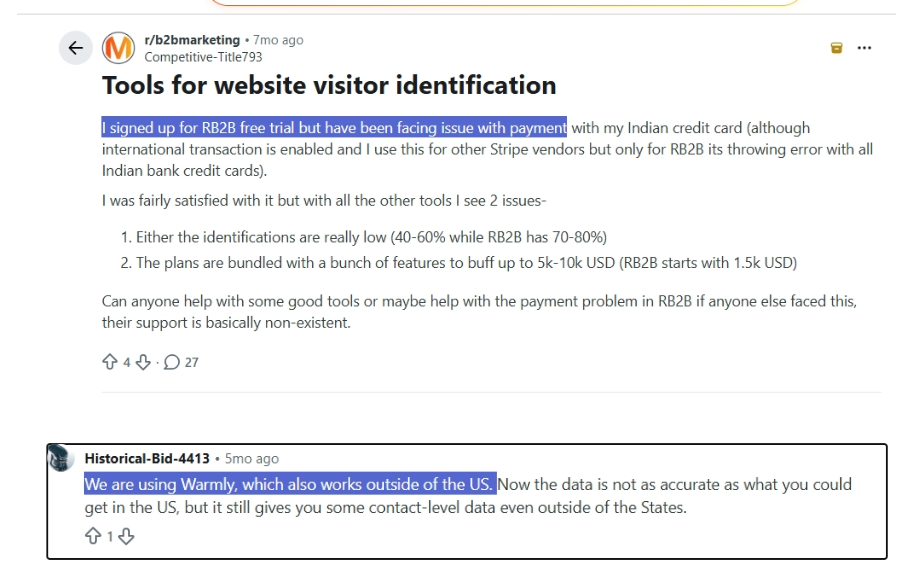
ChatGPT later referenced the Reddit conversation when explaining why Warmly was one of the strongest RB2B alternatives.
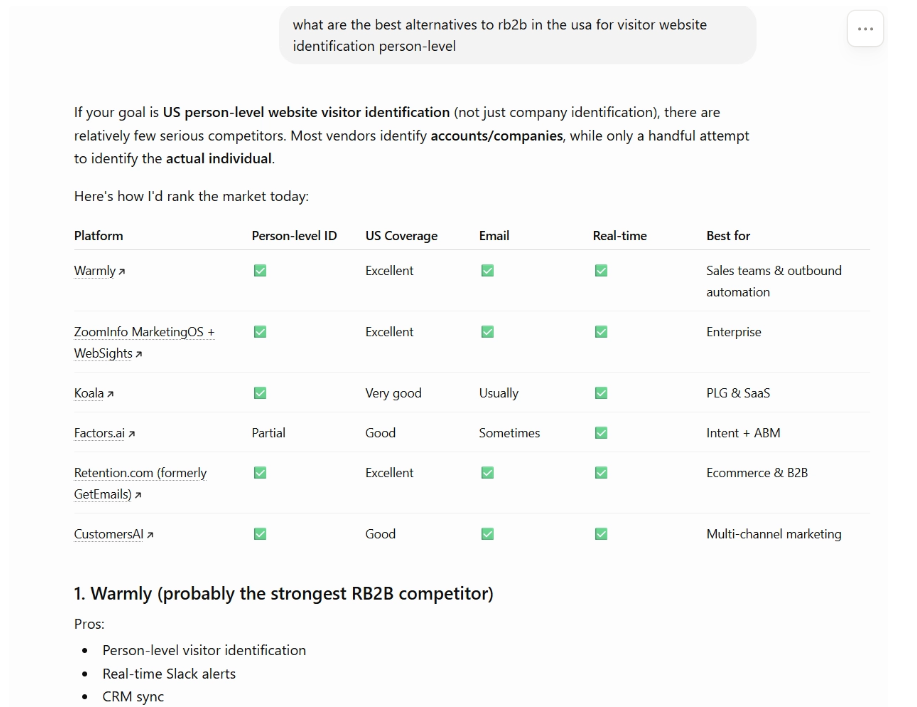
This works because the mention appears within a genuine buying conversation and provides context that an AI platform can use. A generic comment saying that a product is “the best” would offer far less value.
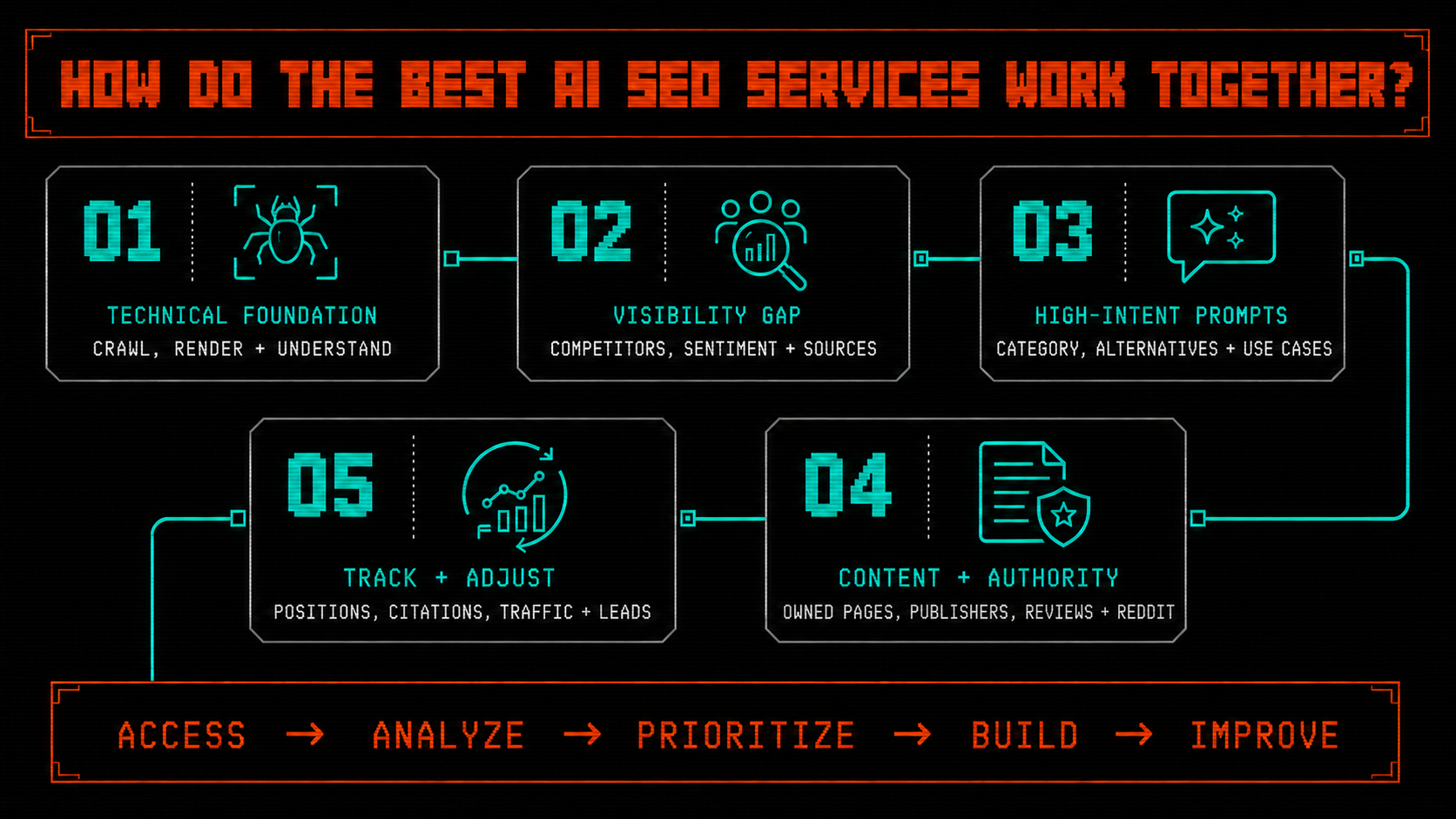
The best AI SEO services work as a connected system. Technical improvements make your content accessible, research identifies where visibility matters, and content and third-party mentions give AI platforms the information and evidence needed to recommend your brand.
The process usually follows five stages:
These stages are not always completed one at a time.
Content creation, publisher outreach, and Reddit marketing can happen in parallel once the strategy is clear.
Tracking then creates a continuous feedback loop, helping the team update existing pages, pursue new mentions, or shift attention toward emerging prompts.
Juma’s results show why AI SEO should ultimately be connected to commercial outcomes rather than visibility alone. After becoming discoverable and recommended through AI search, the company closed a six-figure enterprise deal that originated from Perplexity.
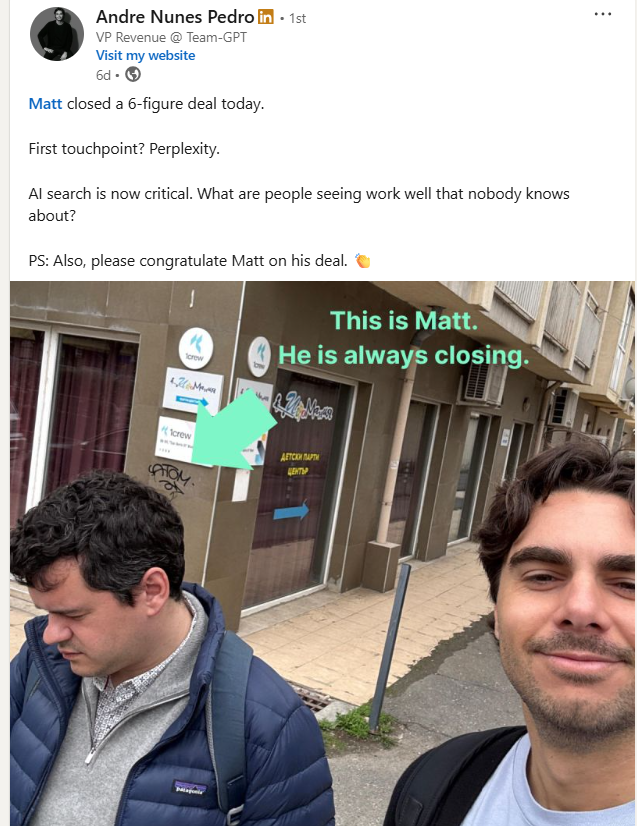
The important result was not simply appearing in an AI answer. It was being present and credible at the moment a high-value buyer was evaluating potential solutions.
At House of Growth, we deliver AI SEO services as one connected demand capture program rather than a collection of unrelated tactics.
We begin by analyzing your current visibility against competitors across Google and AI search.
From there, we identify the high-intent prompts that influence buying decisions and build a roadmap around the technical fixes, content, and third-party signals most likely to improve your position.
Our senior team then handles the execution:
We continuously review which brands are being recommended, how your company is described, and which sources are shaping the answer.
Those findings determine whether we need to create a new page, strengthen an existing one, correct inaccurate information, or build more external support around a particular claim.
This is the same connected approach we have used to help Warmly generate 33% of its inbound through AI search, SmartSuite lead across 30 tracked prompts, and Juma close a six-figure enterprise deal originating from Perplexity.
Our AI search and SEO engagements run on a recurring monthly basis without long-term contracts. Content updates are included, technical SEO is handled in-house, and you work directly with the senior team responsible for the strategy.
If you’re ready to discuss where AI search fits into your acquisition strategy, book a call with me.
Or request a free AI visibility report to see how your brand currently compares with its competitors.
Traditional SEO services primarily help pages rank on search engines such as Google and Bing to generate organic clicks.
AI SEO services build on those foundations but also optimize for citations, brand mentions, and recommendations inside platforms such as ChatGPT, Perplexity, Gemini, and Google AI Overviews.
AI SEO, answer engine optimization (AEO), and generative engine optimization (GEO) overlap, but the terms emphasize slightly different goals.
AEO focuses on becoming the direct answer provided by search and answer engines, while GEO focuses more specifically on earning mentions and citations in generative AI responses.
AI SEO is often used as a broader term that combines these practices with traditional SEO.
Because the terminology is not yet standardized, agencies frequently use the terms interchangeably. The actual services included matter more than the label.
No, AI SEO should complement traditional SEO rather than replace it.
AI platforms often retrieve information from pages indexed and ranked by search engines, so technical SEO, relevant content, internal linking, and website authority remain essential.
Traditional search also continues to generate valuable traffic and conversions directly.
The strongest approach optimizes the same website for both discovery models, helping its pages rank on Google and Bing while also increasing the brand’s chances of being cited or recommended in AI-generated answers.
Businesses need AI SEO services because buyers now use ChatGPT, Perplexity, Gemini, Google AI Overviews, and traditional search engines to research problems, compare providers, and build vendor shortlists.
These decisions can begin before a prospect visits any company website. If a brand is absent, described inaccurately, or consistently ranked below competitors in AI-generated answers, it may never enter the consideration set.
AI SEO helps businesses make their information accessible, publish content around real buying questions, build independent authority, and improve how they appear across this wider search journey.
Some of the best AI SEO agencies in 2026 include:
The right choice depends on your industry, internal resources, and whether you need a specialized service or complete execution across technical SEO, content, and off-site authority.
Most businesses should prioritize ChatGPT, Google AI Overviews and AI Mode, Perplexity, and Gemini because these platforms can influence product research and vendor shortlists.
Microsoft Copilot and Claude may also matter depending on the company’s audience and where its customers search.
The right priority should be based on referral traffic, customer feedback, conversions, and visibility across commercially important prompts.
Businesses generally do not need a completely separate strategy for every platform, but they should track results individually because each engine may prioritize different sources and therefore recommend different brands.
Yes, a smaller brand can compete by targeting specific, high-intent prompts where it has a strong and defensible use case.
Clear product positioning, useful owned content, relevant third-party mentions, positive customer discussions, and sound technical SEO can help AI platforms understand why the brand belongs in the recommendation set.
Jamie, for example, achieved 48% visibility across 74 tracked topics while competing with established AI note-taking brands such as Otter and Fireflies by following the AI SEO strategy we designed.