If you are looking for the best AEO strategy, I am going to explain you how to do it in 2026. This playbook is based on my experience on creating 52 AEO content strategies over the last 3 months for SaaS companies.
Without further ado, let’s get right to it:
Every AEO strategy starts by researching the topics your buyers look for when they are ready to evaluate or purchase a solution.
Put simply, your goal is to uncover the bottom-of-funnel topics that match real buying intent.
💡 If you’ve been in your industry for long enough, you probably know how people search for your solution and refer to your product; however, it’s still a worthy exercise to do.
There are two ways to handle this:
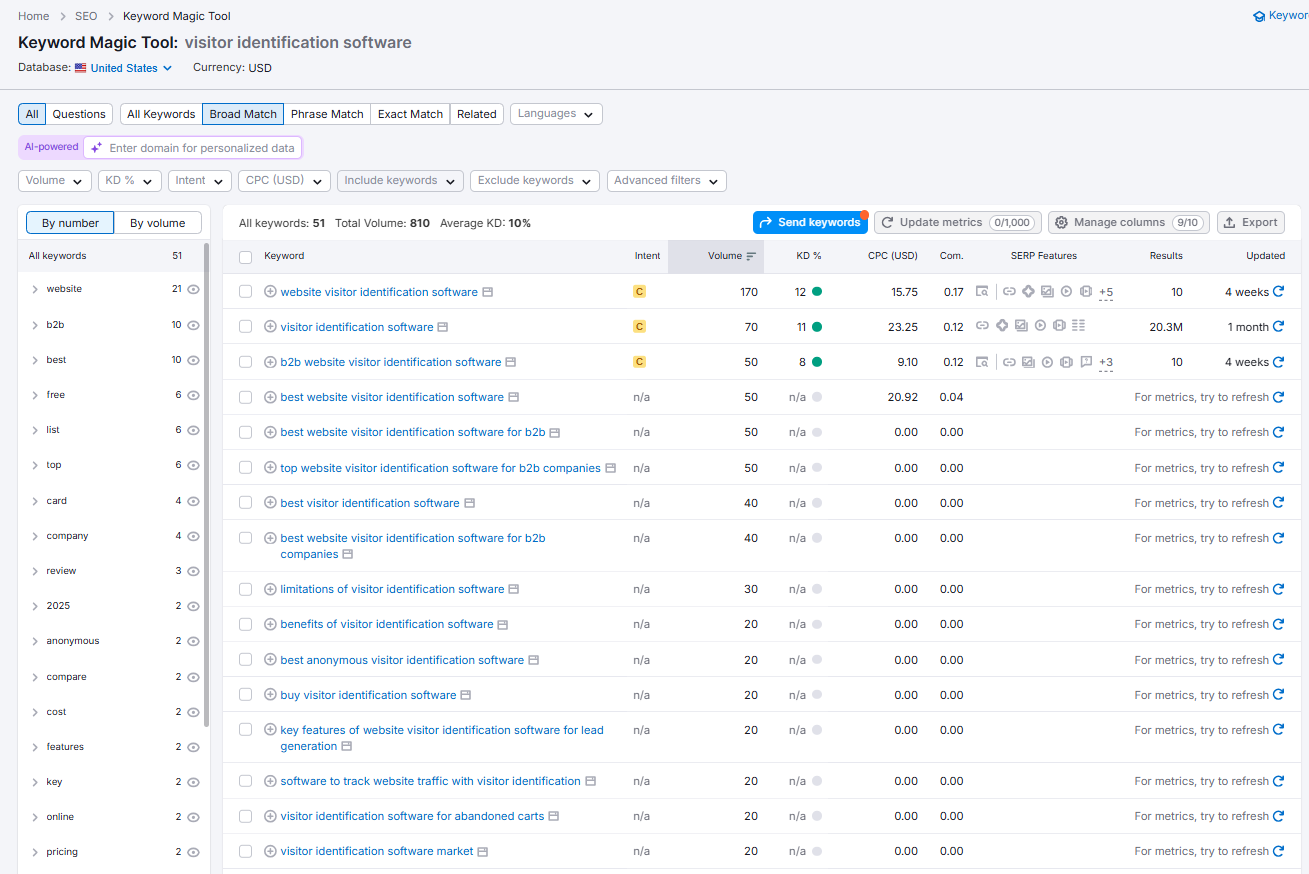
Source: Semrush’s Keyword Magic Tool.
Focusing on the main head terms is essential. When you hold strong rankings for the primary keyword, you automatically capture a wide range of related long-tail variations.
This also helps with LLM visibility, as AI systems often phrase the same intent in various ways. Ranking for the main term creates coverage for the full set of variations.
➡️ That’d be a matter of adding a ‘’how did you find us?’’ question in your onboarding flow or sales calls, putting "AI search’’ as the option, and then a bonus field for ‘’what prompts did you use’’ if they select ‘’AI search’’.
The next step is to take your keyword research and start creating owned (article) content.
This content will then become the foundation of your entire AEO & SEO strategy. It should be strong enough to rank for the target SEO keywords and clear enough for LLMs to understand and recite your product’s positioning.
💡 If I were you, I wouldn’t rely on generic AI-generated writing or low-context freelancers.
In House of Growth, we approach article content by first conducting interviews with the people who understand the product best (e.g., founders, senior marketers, sales leaders, and/or product experts).
Your article content should explain to both users and AI search engines:
This level of specificity helps you appear for very detailed and solution-aware prompts inside AI search engines.
So far, so good, but you might be wondering: what content exactly should I create?
The single most important AEO play is to CREATE and OWN your SaaS category definition.
When someone asks ChatGPT, "What are the best accounting tools for start-ups?" or ‘’What is the best returns management software for Shopify brands’’ you should be THE source cited.
This requires comprehensive, definitive guides that AI models can reference.
Comparison and category-related content should be pretty much the foundation of your entire AEO strategy. Every other content piece will then build authority for these pillar pages.
I suggest that my clients write these for three reasons:
According to Glen Allsopp's research, which analysed 26,283 source URLs on AI search, “best X” blog lists represented 43.8% of all page types and placing higher on multiple comparison lists likely increases your chances of being recommended by ChatGPT.
Some examples include:
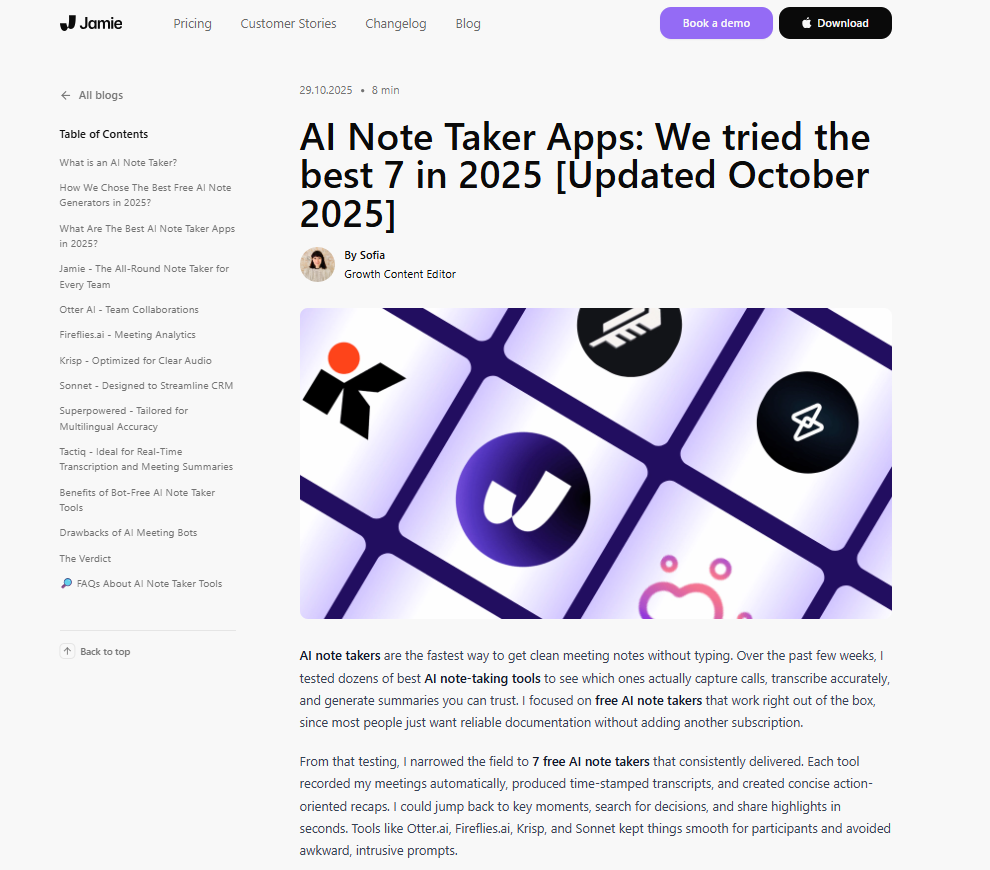
Here’s an example that’s working well for us:
➡️ You will also boost your chances of having your content recommended by search engines by implementing schema markup (e.g., BlogPosting), as it’ll help AI search engines better understand your content.
I’ve noticed that AI engines love comparison content.
When someone asks “ best alternatives for [Your Competitor]”, you have to show up and capture the audience with buying intent.
You’ll be able to do that by creating ‘’alternative’’ article content of your competitors and then clearly explain what makes you better than them and other competitors on the market.
This content will capture users actively evaluating options and will introduce your product as a better alternative.
➡️ If you don’t have comparison content for all your competitors, you are letting someone else control the narrative for you.
This is a big mistake if you want to have visibility around buying intent terms.
Some examples include:
💡 Pro Tip: All comparison content must include detailed comparison tables with specific metrics, ROI data, and clear "best for" recommendations. This is the format AI engines most easily extract and cite.
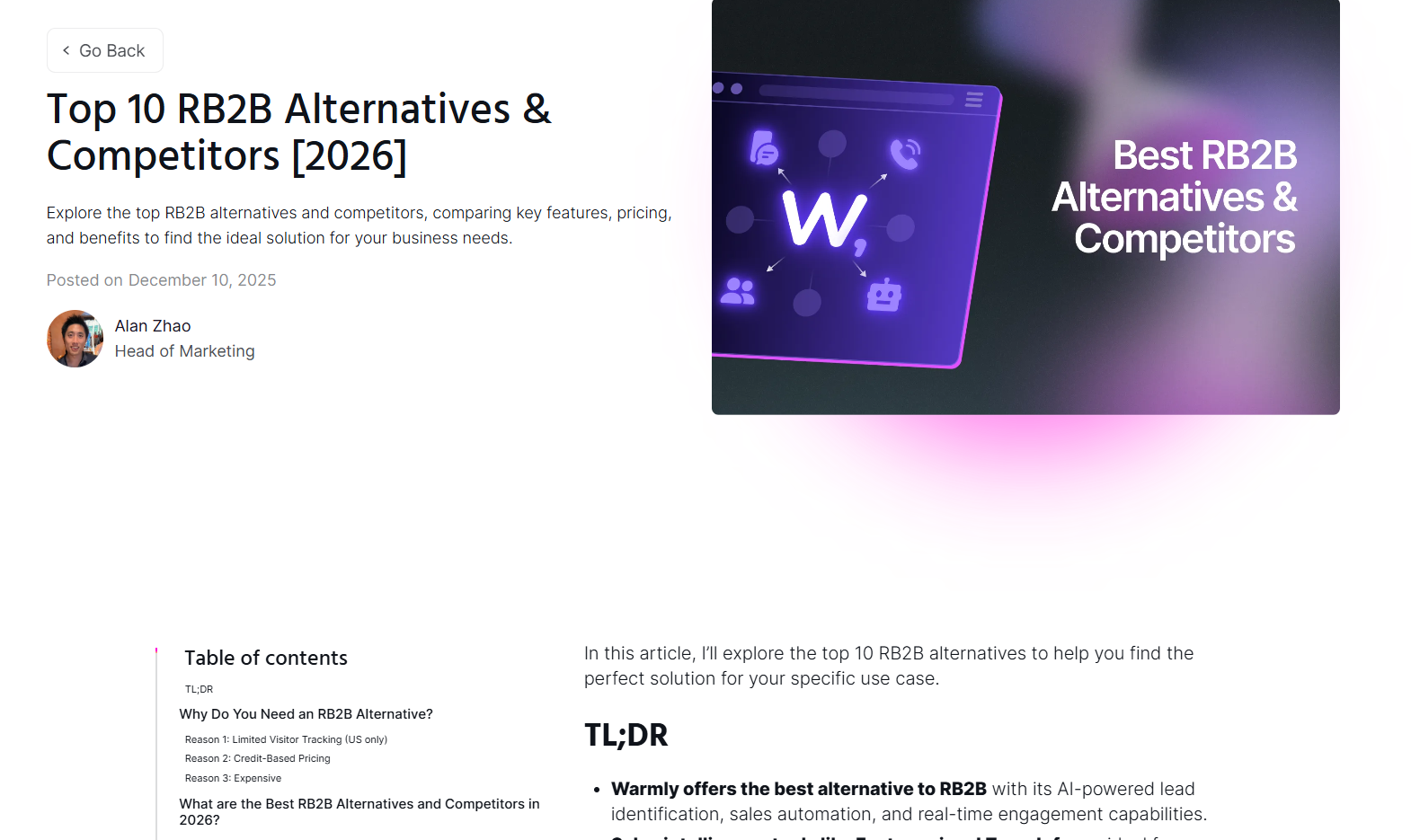
Here’s an example that’s working well for us:
Once your core content is published, the next step is to strengthen its visibility by increasing trusted third-party signals.
This includes, but is not limited to:
Securing media brand mentions is about getting mentions from publishers with a high influence rate on your industry.
You can run outreach to those websites and request inclusion in their listicles, comparison pages, or informational articles.
Considering that these pages heavily influence how LLMs decide which brands to mention, earning placement can significantly improve AI search visibility.
You should also identify Reddit threads that influence AI citations to get visibility there.
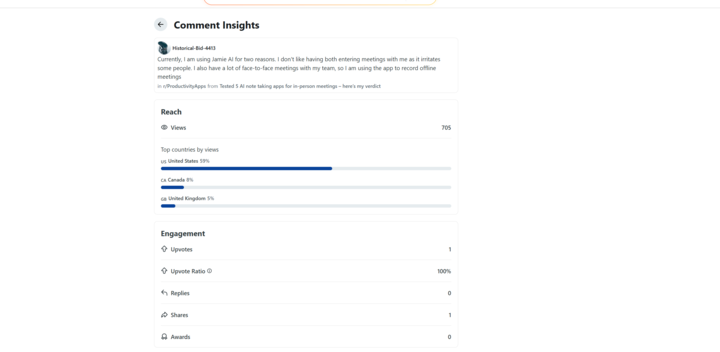
For example, an unbiased comment that we left for one of our clients got 700+ views on top of helping us compete for the target prompt.
Getting YouTube brand mentions is done through either publishing your own YouTube content or collaborating with influencers to promote you on their YouTube channel with sponsored content (can get expensive, though).
According to a case study published by Ahrefs, YouTube mentions show the strongest correlation with AI visibility as of December 2025, even ahead of branded web mentions.
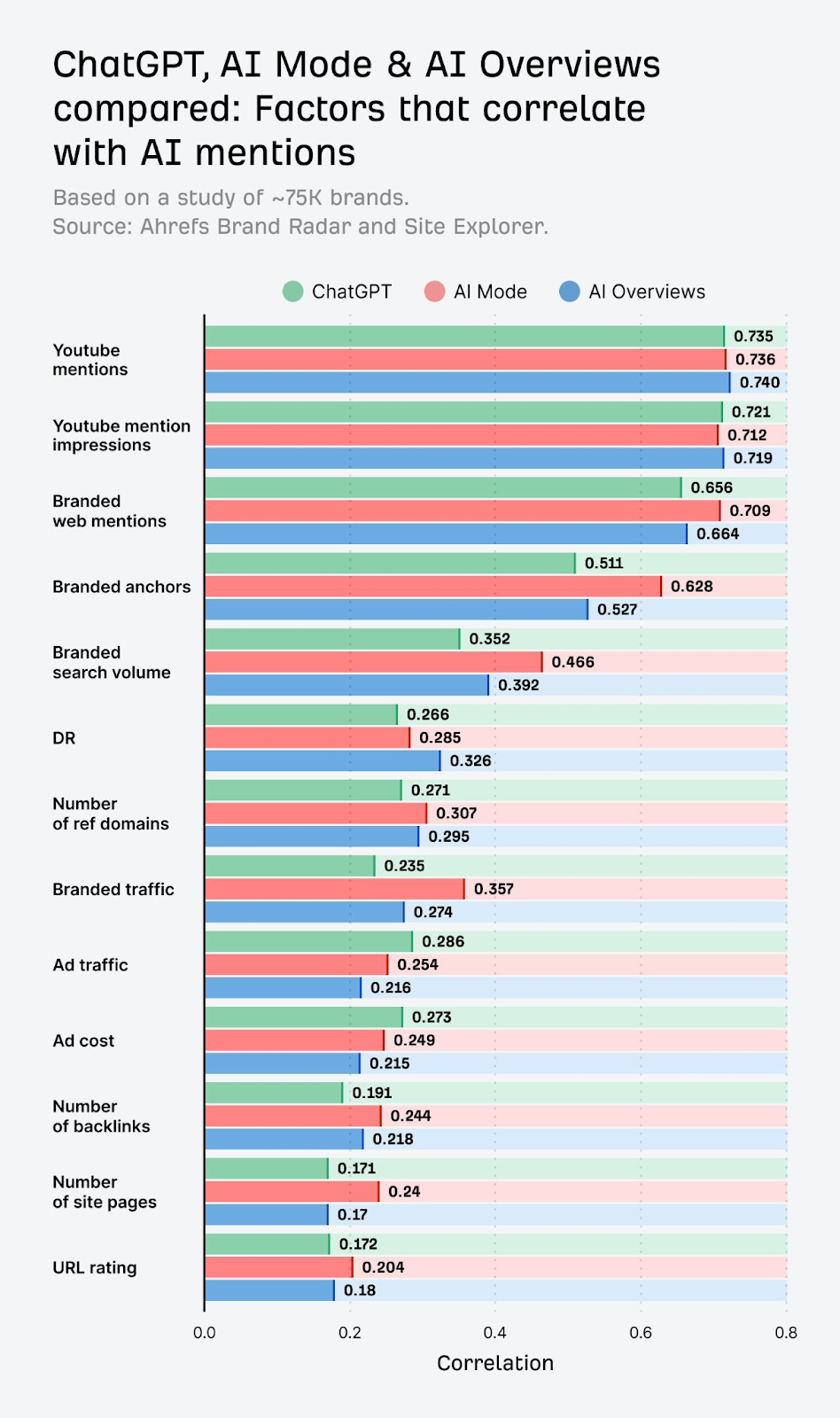
Source of data and image: Ahrefs.
Warmly partnered with us to crack AI search early and now drives ~25% of its demos from AI-powered discovery channels.
We optimized for how LLMs surface and cite information, prioritizing:
From an SEO perspective, we were able to rank in position 1 without having to build backlinks for lucrative keywords, such as ‘’website visitor identification software’’ which is now one of our main money keywords.
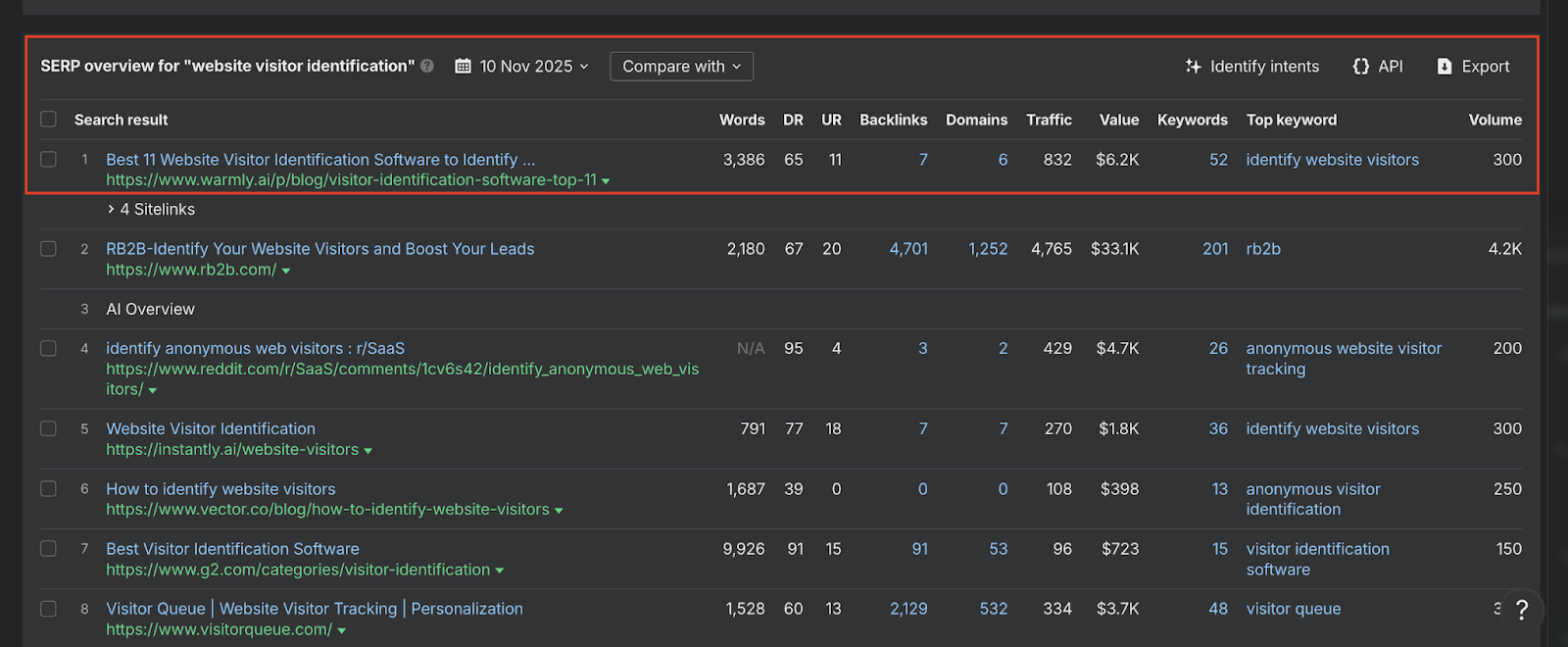
As a result, Warmly now receives ~1,000 monthly LLM-driven sessions, is cited in 37% of tracked AI conversations, and ranks #1 for high-intent keywords without backlinks.
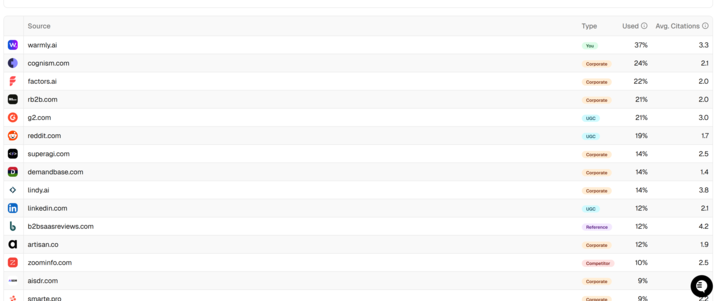
You can use a tool like Peec AI (it has a 14-day free trial) to get an idea of your current AEO visibility and see how you do against your competitors.
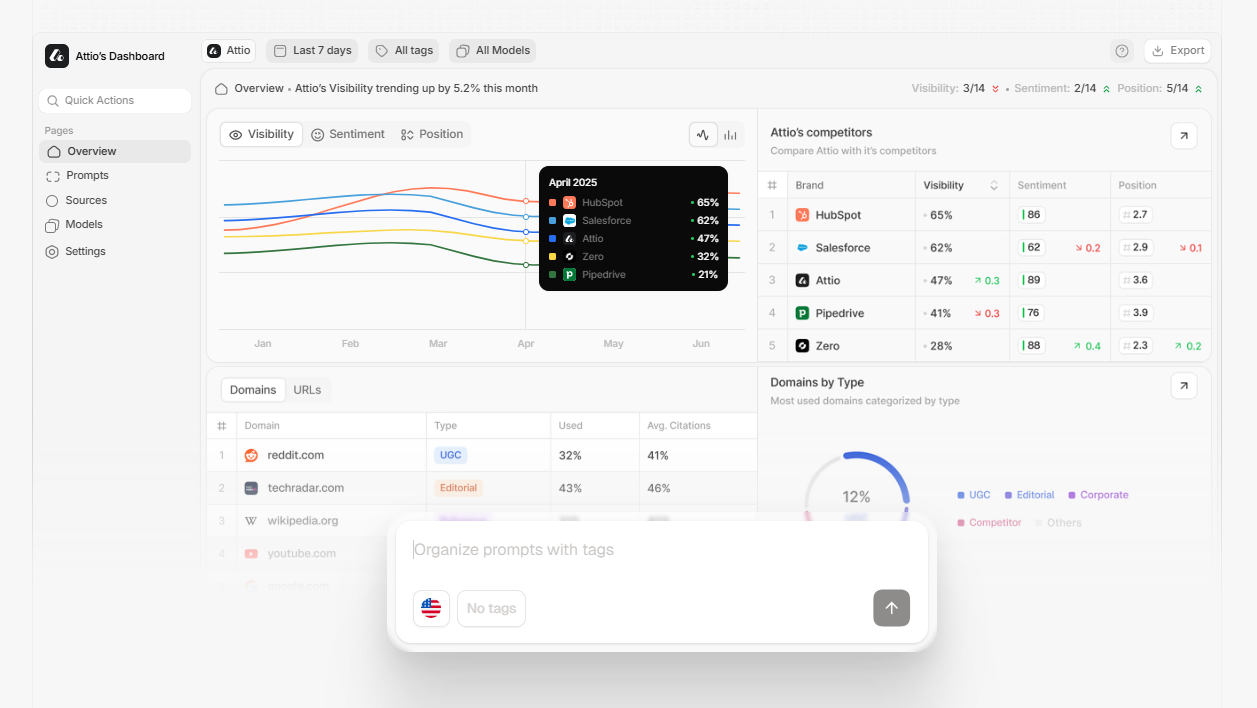
Hyper focus is important in the beginning for SaaS brands, mostly because not many of us have HubSpot’s content marketing budget.
You want to focus on 5-10 initial prompts that you want to track and compete for, such as 3-4 category terms, such as ‘’recommend me the best reverse logistics software on the market in Germany’’ and 3-4 competitor-related prompts, such as ‘’recommend me the best Narvar alternatives for Shopify stores.’’
If you’re a start-up, it’s likely that you don't have topical authority in AI training data yet. That means you shouldn't dilute your strength by jumping from topic to topic.
All of your initial efforts should be focused on covering a single topic cluster deeply before moving to another one.
For example, writing all 10 articles on ‘’10 best project management tools for [ICP]’’ and then writing 10 competitor comparison articles on ‘’10 best [Competitor] alternatives in 2026.’’
Publishing fast can be crucial for AEO because the earlier you publish, the earlier AI models can potentially train on your content.
This is why I’d recommend you not be a perfectionist from day one and wait a long time to publish content.
The slower you publish, the longer it takes for AI to index and cite. You can always publish fast and optimize later: this is something many teams don't understand about AEO.
I’ve noticed that AI search engines love statistical content. I’d recommend you to conduct original research in your industry, publish it, and distribute it across your article content.
As someone who has founded and grown 2 SaaS businesses myself, I know how hard it was in the beginning to gain traction, especially with a new growth channel.
This is why I’m willing to support SaaS start-ups and scale-ups by helping them create their AEO strategy.
You can book a call with me here.